Malaysia needs independent commission to police deepfakes alongside new AI bill
Speaking in the Dewan Rakyat on 22 June, Gobind explained that the upcoming bill aims to build safety into AI systems from the outset, balancing technological innovation with aggressive public and data protection.



SHAH ALAM - A single legislative act will be insufficient to protect Malaysia from the rapid proliferation of deepfakes and identity fraud, a leading tech expert has warned, urging the government to establish an independent Artificial Intelligence (AI) Commission alongside its proposed AI Governance Bill.
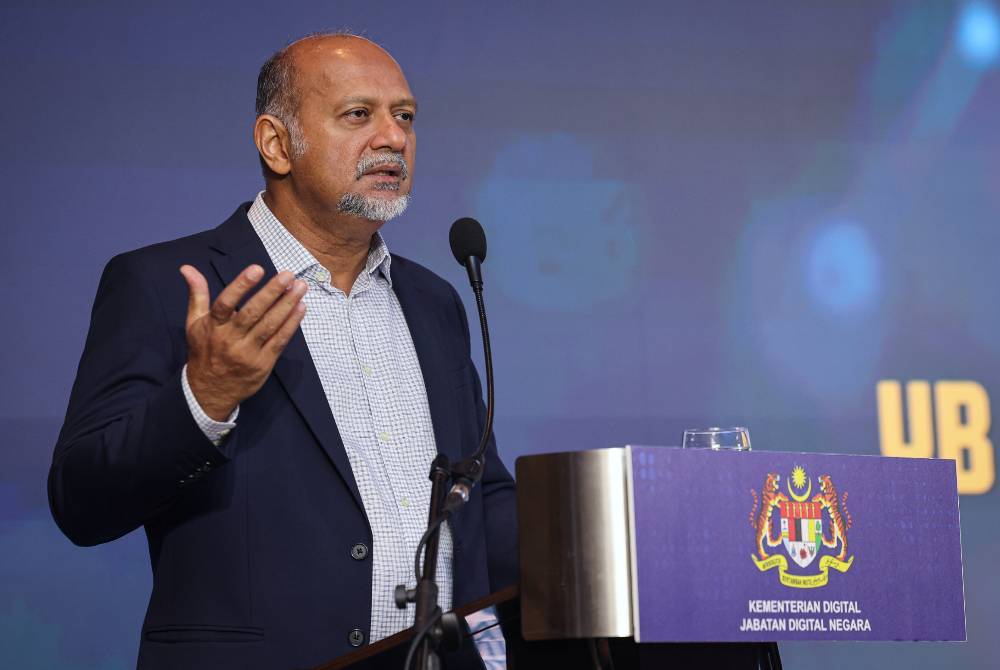
The warning comes as Digital Minister Gobind Singh Deo confirmed a two-pronged strategy focusing on utilising existing laws to prosecute immediate cybercrimes while drafting a comprehensive AI Governance Bill to regulate the technology's lifecycle.
AI trainer and consultant Cletus de Rozario said that while the legislative step is timely, the sheer velocity of artificial intelligence development requires a dedicated, permanent regulatory body to safeguard public trust.
"A single AI Governance Bill is unlikely to be sufficient over the long term," de Rozario said in an interview with Sinar Daily.
"Given AI’s growing influence across healthcare, finance, and national security, Malaysia should seriously consider establishing a dedicated AI Commission to serve as the central authority for monitoring developments and ensuring compliance."
The urgency for stronger regulatory oversight is being driven by the democratisation of deepfake technology, which de Rozario noted has become highly sophisticated, accessible, and inexpensive.
"Scammers and malicious actors are already using AI-generated content to impersonate individuals, create false identities, and spread misinformation on a scale that was previously difficult to achieve," he said. "Tasks that once required specialised expertise can now be carried out using widely available tools with minimal technical knowledge."
De Rozario warned that beyond financial fraud, unchecked synthetic content has the potential to damage corporate reputations, manipulate public opinion, and trigger socio-political instability. While Malaysia's current legal frameworks cover traditional defamation and fraud, they fail to account for the unique challenges of AI-generated content.
However, he stressed that regulation should not be viewed as an enemy of progress. Instead, robust ethical boundaries will provide the stability needed for sustainable tech investment.
"Innovation and regulation should not be viewed as competing priorities but as complementary elements," de Rozario said, adding that the ultimate goal of the framework must be to enhance human intelligence rather than replace human judgment.
Speaking in the Dewan Rakyat on 22 June, Gobind explained that the upcoming bill aims to build safety into AI systems from the outset, balancing technological innovation with aggressive public and data protection.
Download Sinar Daily application.Click Here!