Adham lives, Hasni falls
Johor BN's lineup highlights the realities of power, patronage and political relevance in a changing party landscape.


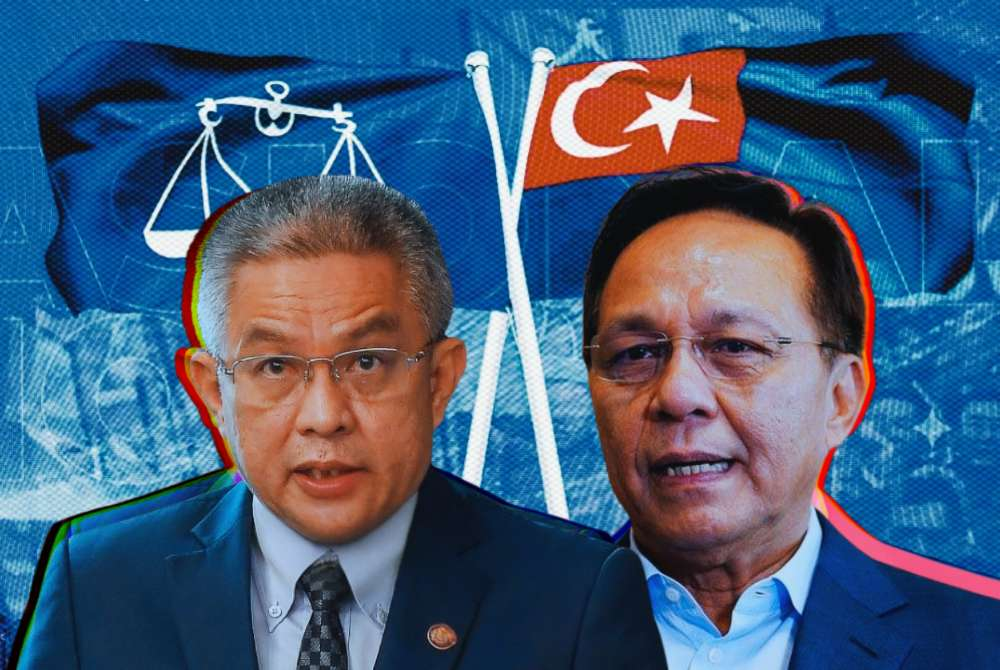
SHAH ALAM – Barisan Nasional's (BN) decision to field former health minister Datuk Seri Dr Adham Baba while leaving out former Johor Menteri Besar Datuk Hasni Mohammad from its state election lineup is being viewed by analysts as a reflection of evolving power structures within Johor Umno rather than a simple question of electoral strength.
Political analyst Arif Anwar Lokmanol Hakim said the move appears linked to efforts to consolidate cooperation between factions aligned with Datuk Seri Hishammuddin Hussein and Umno president Datuk Seri Ahmad Zahid Hamidi.
"The candidate selection for the Johor state election appears to be more about consolidating the alliance between the H20 faction associated with Hishammuddin and the party president's camp, which have now come together," he said.
According to Arif, Adham's reinstatement in his former state constituency is consistent with this broader political arrangement, while also reflecting his continued influence in the Tenggara parliamentary area.
"He is still regarded as a winnable candidate based on his track record and local influence," he said.
Arif also suggested that Hasni's omission should not be interpreted as a sign of political decline, noting that the former Johor Menteri Besar remains a Member of Parliament and is increasingly focused on federal-level responsibilities.
"His role is now more concentrated at the national level," he said.
He added that the decision forms part of a broader leadership transition within Johor Umno from Hasni to Menteri Besar Datuk Onn Hafiz Ghazi.
"That transition is clearly being managed from Hasni to Onn Hafiz Ghazi," he said.
Arif believes grassroots members are unlikely to object to the candidate selection as long as BN remains competitive and delivers electoral victories.
"Members generally accept decisions made by the party leadership, even when their preferred candidates are not selected, provided the party continues to perform well," he said.
He acknowledged speculation that the selection process involved considerable influence from the central leadership, leading to claims of rival camps or "Team A" and "Team B" within the party.
"However, when examining the final list, there appears to be a balanced representation of both camps. This will help strengthen support for a new generation of leadership," he said.
Arif described the decision as signalling "the end of one political era" while reinforcing a new phase under Onn Hafiz's leadership.
Meanwhile, political analyst Oh Ei Sun said internal power struggles within Johor Umno may also have played a role in Hasni's exclusion.
"Onn Hafiz replaced Hasni as Menteri Besar and naturally may not wish to see Hasni return to state politics, as that could potentially create a challenge to his position," he said.
"In that sense, Hasni may have lost out in a state-level power contest."
On Adham's return, Oh suggested BN may be seeking to preserve support among influential local leaders.
"You need to take care of different political warlords in their respective constituencies," he said.
While acknowledging that Adham's tenure as health minister attracted criticism during the Covid-19 pandemic, Oh speculated that local considerations may have outweighed national perceptions.
"Perhaps Adham remains popular in his constituency and is therefore viewed as the best option to secure the seat. Otherwise, his return would be difficult to explain," he said.
The contrasting fortunes of Adham and Hasni have emerged as one of the most closely watched aspects of BN's candidate lineup, with analysts viewing the selections as an indication of Johor Umno's ongoing generational shift and efforts to consolidate support behind its current leadership.
Download Sinar Daily application.Click Here!